
The Board Must Be Independent
Under 7 CFR § 226.2, an independent board meets regularly and has the power to hire and dismiss the executive director. This power must be real, not just written in the bylaws. Members should be able to review management’s work fairly and act when needed. A board made up mainly of employees, relatives, or people with financial ties to the sponsor may struggle to act independently. Choose members carefully and set clear rules for conflicts of interest.
Board Members Need CACFP Training
- Sponsor duties to facilities and providers
- Meal patterns and who can participate
- Monitoring visits and steps to correct problems
- Claim review and submission
- Allowed costs and purchasing rules
- Civil rights and recordkeeping
- The serious-deficiency process and consequences of poor management
Financial Oversight Goes Beyond the Bank Balance
- CACFP funds received and provider payments made
- Office and management costs compared with the budget
- Business dealings with people connected to the sponsor
- Credit card charges and expense repayments
- Debts and other amounts owed
- Audit findings and plans to correct problems
Identify and Manage Conflicts of Interest
- Report actual or possible conflicts before the board discusses a deal
- Step out of discussions and votes when appropriate
- Record the decision and why it serves the organization’s interests
Report and Follow Up on Compliance Problems
- State agency findings
- Proposed claim denials or repayment demands
- Major audit findings
- Staff misconduct affecting CACFP
- Serious data-security or recordkeeping problems
- Ending sponsorship of a major facility or provider
Keep Clear Records of Board Actions
- Who attended
- Financial and CACFP reports reviewed
- Conflicts of interest and who stepped out
- Contracts and major purchases approved
- Plans to correct problems and follow-up results
- Executive director reviews
- Formal votes and decisions
Plan for Key Staff Changes
- Secure access to banking, accounting, and CACFP systems
- Claim submissions and monitoring schedules
- Contact with the state agency
- Payroll and provider payments
- Access to contracts, policies, and Program records
- Who takes over key duties and decisions
A Practical Board Checklist
Review these questions regularly.
-
Do we meet regularly and record our decisions?
-
Do members understand the sponsor’s CACFP duties?
-
Are financial reports clear, complete, and on time?
-
Are Program funds spent only on allowed costs?
-
Are conflicts of interest reported and managed?
-
Are required monitoring visits completed?
-
Are problems fixed on time, and do the fixes work?
-
Do we have enough staff and resources?
-
Are we told about major findings and concerns?
-
Could we keep operating if a key employee left tomorrow?
Federal References
7 CFR § 226.2
Definition of an independent governing board of directors
State agency duties and CACFP performance standards
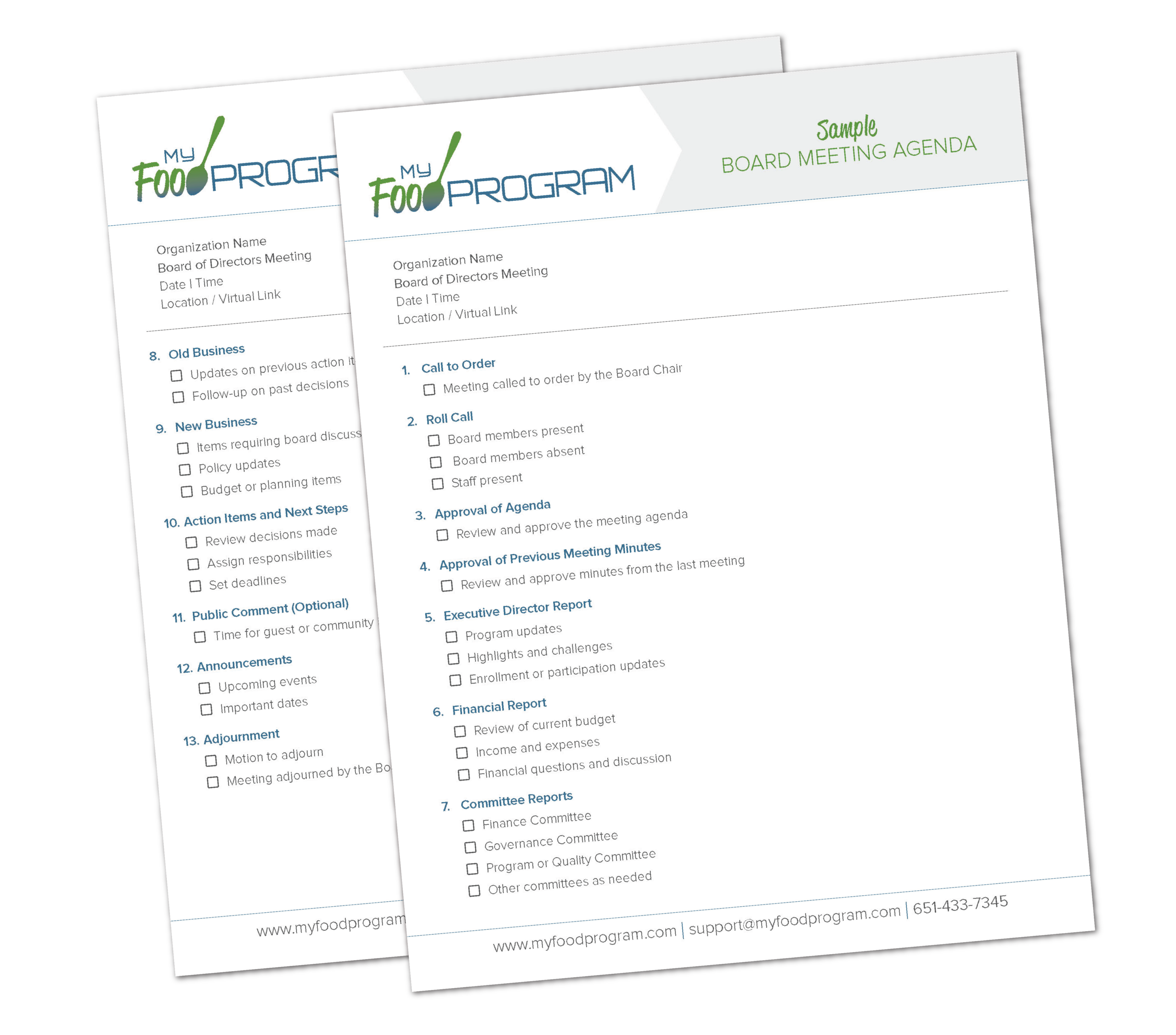
Sample Board Meeting Agenda
Sending agendas and packets ahead of time allows meetings to focus on discussion instead of catching up. Click the image below to download a sample Board Meeting Agenda.